
Meet The Designer
Earnest Studio
Founded by American-born, Rotterdam-based designer Rachel Griffin, Earnest Studio creates furniture, lighting and objects informed by her background in graphic design. Her work often begins with a material, production method or mechanical principle, developing these ideas into simple, adaptable designs.
My work explores themes of modularity and multiplicity, driven by a fascination for simple, flexible structures with a forthright attitude toward material. I am interested in three-dimensional works which are simultaneously graphic in nature, informed both by my background in graphic design, and by a desire to create objects that contribute to composing simple, bold environments.
Earnest Studio: From Graphic Design to Three Dimensional Objects
Rachel Griffin founded Earnest Studio in Rotterdam in 2012 after studying at Design Academy Eindhoven. Her earlier career in graphic design continues to influence how she works in three dimensions, particularly her interest in strong silhouettes, simple structures and objects that can be arranged or used in different ways.
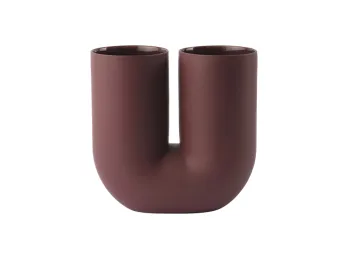
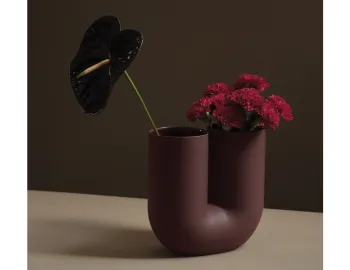
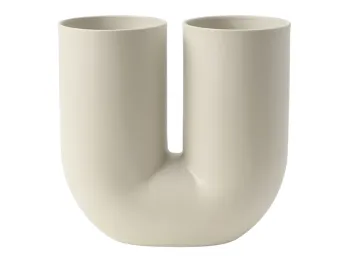
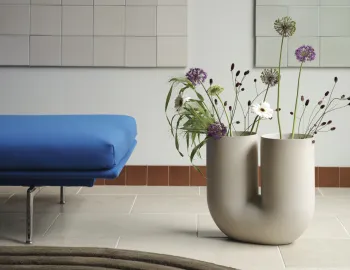
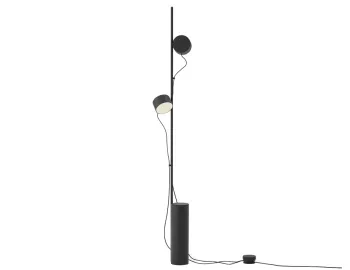
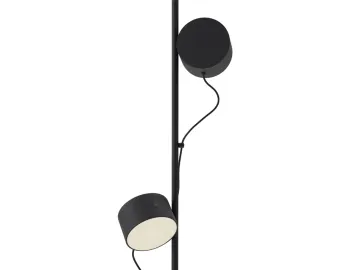
Griffin often starts with a material or mechanical principle and develops the design around what it can do. The Post Lamp grew from experiments with flexible joints, using magnetic connections to allow its lighting units to be repositioned, rotated and dimmed. The Kink Vase takes a different approach, combining digital modelling with traditional slip-casting to create its double-ended porcelain form. Together, the designs show how Griffin moves between technology and established production methods to arrive at objects that are visually direct but technically resolved.
Rachel Griffin founded Earnest Studio in Rotterdam in 2012 after studying at Design Academy Eindhoven. Her earlier career in graphic design continues to influence how she works in three dimensions, particularly her interest in strong silhouettes, simple structures and objects that can be arranged or used in different ways.
Griffin often starts with a material or mechanical principle and develops the design around what it can do. The Post Lamp grew from experiments with flexible joints, using magnetic connections to allow its lighting units to be repositioned, rotated and dimmed. The Kink Vase takes a different approach, combining digital modelling with traditional slip-casting to create its double-ended porcelain form. Together, the designs show how Griffin moves between technology and established production methods to arrive at objects that are visually direct but technically resolved.

Authentic Designer Brands
Genuine pieces from leading European and local designers and brands.

Here to Help
Expert advice and support, before and after your purchase.

Australia-Wide Delivery
Reliable delivery to homes and businesses across Australia.

Secure Payment
Shop with confidence knowing your payments are secure.