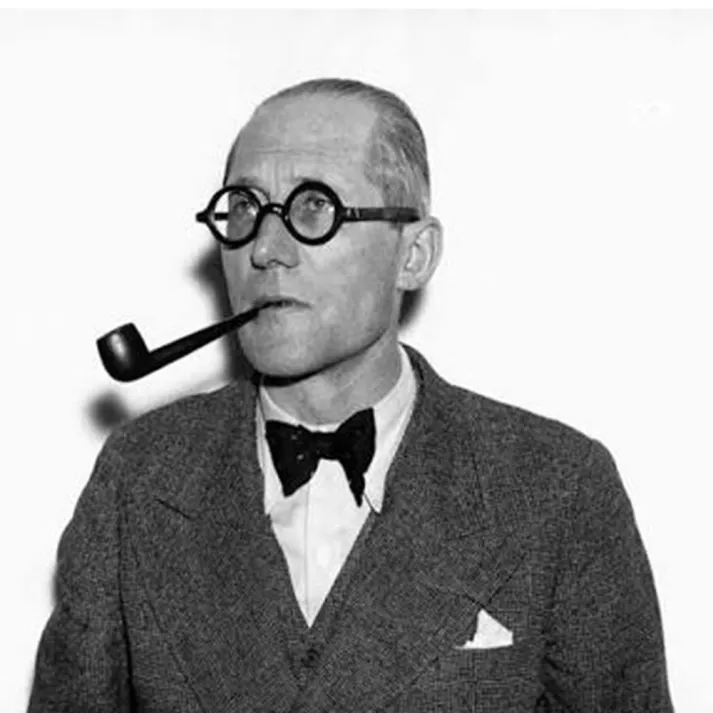
Meet The Designer
Le Corbusier
Le Corbusier was one of the central figures of 20th-century Modernism. His approach to furniture grew directly from his architecture, treating seating, tables and storage as part of the wider organisation of a space and the way it was used.
Le Corbusier: From Architecture to Furniture
Born Charles-Édouard Jeanneret, Le Corbusier became one of the most influential architects and designers of the 20th century. His work extended across architecture, urban planning, interiors, furniture, painting and writing, united by an interest in how design could respond to modern ways of living.
Furniture was part of this thinking rather than a separate discipline. Le Corbusier began designing furniture and interiors early in his career and developed seating, tables and storage in relation to the buildings and spaces he designed. His investigations into different ways of sitting later informed the furniture programme developed with Pierre Jeanneret and Charlotte Perriand from 1928.
Le Corbusier's broader approach placed the human body and the use of space at the centre of furniture design. Seating was considered according to how a person sits, rests and moves, connecting the scale of furniture with Le Corbusier's much larger ideas about architecture and modern living.
Born Charles-Édouard Jeanneret, Le Corbusier became one of the most influential architects and designers of the 20th century. His work extended across architecture, urban planning, interiors, furniture, painting and writing, united by an interest in how design could respond to modern ways of living.
Furniture was part of this thinking rather than a separate discipline. Le Corbusier began designing furniture and interiors early in his career and developed seating, tables and storage in relation to the buildings and spaces he designed. His investigations into different ways of sitting later informed the furniture programme developed with Pierre Jeanneret and Charlotte Perriand from 1928.
Le Corbusier's broader approach placed the human body and the use of space at the centre of furniture design. Seating was considered according to how a person sits, rests and moves, connecting the scale of furniture with Le Corbusier's much larger ideas about architecture and modern living.

100% Original Products
We offer only genuine high-quality products you can trust.

30-Days Free Returns
Enjoy the freedom of stress-free shipping.

Fast Shipping
Reliable Australia wide shipping services.

Secure Payment
Shop with confidence knowing your payments are secure.